
Stage and role hiring
What is a forward deployed engineer, and how do I hire one?
By Nick Kimball · Published 30 September 2026 · Last updated 30 September 2026 · 7 min read
The role AI startups keep posting, explained, with a hiring process a founder can run.
A forward deployed engineer (FDE) is a software engineer who works directly with your customers to get your product running inside their systems, writing production code while embedded with the customer's team. To hire one, look for an engineer who can ship real code and also run a customer meeting, test for both in your interview loop, and be clear up front about how much customer time and travel the job involves.
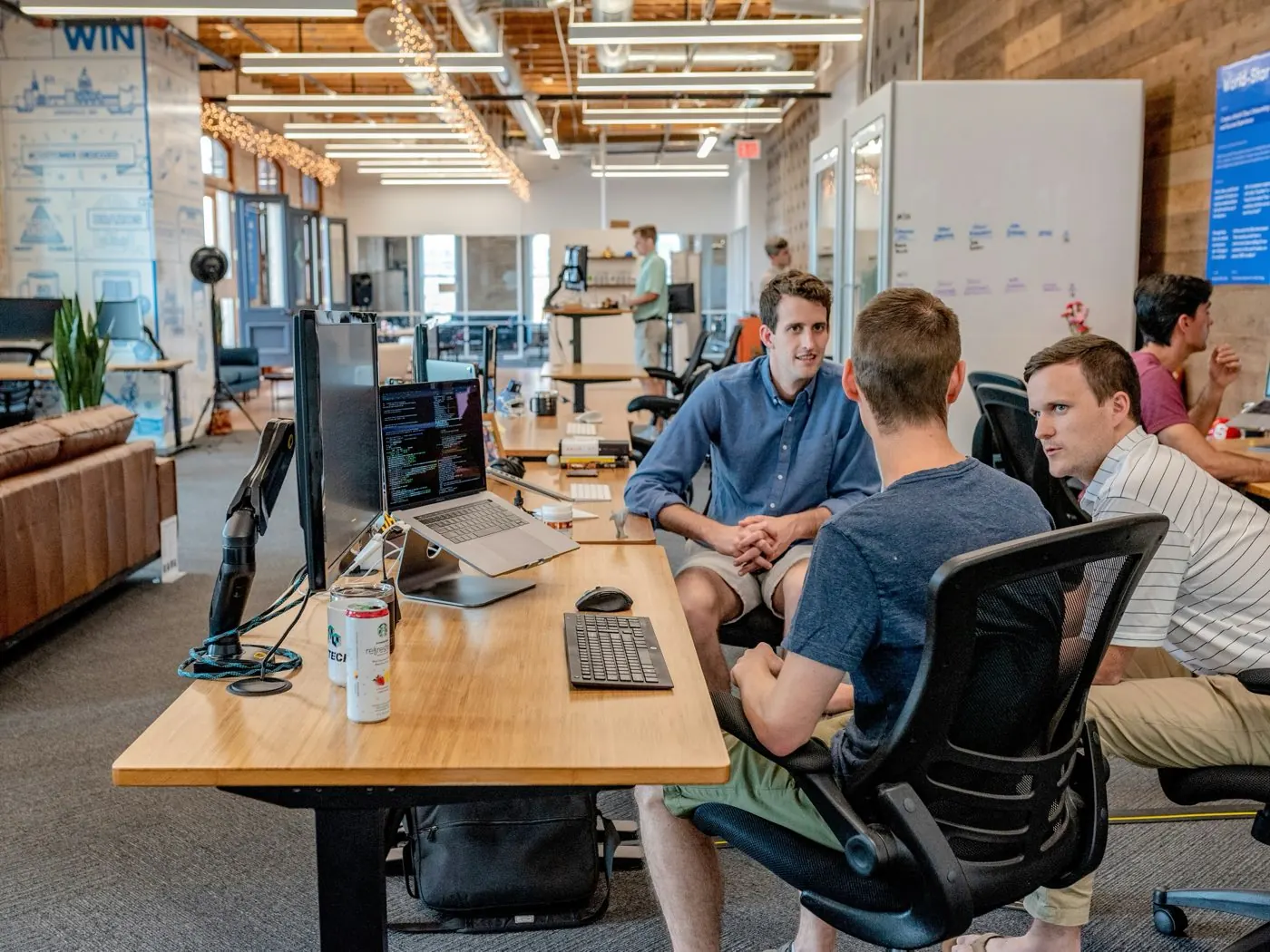
What does a forward deployed engineer do?
An FDE sits between your product and a specific customer's messy reality. They take what you have built and make it work on the customer's data, tools and workflows.
Most of the work is engineering. The difference is that the requirements come from a customer in the room, not from a product spec.
A typical week for an FDE
- Scoping a deployment with the customer's technical team
- Writing integrations, data pipelines or custom workflows on top of your product
- Debugging problems that only show up in the customer's environment
- Reporting back to your product team on what customers keep asking for
- Presenting progress to the customer's stakeholders
Where the role came from
Palantir created the role. Its own engineering blog describes two engineering tracks: "Dev," who build the core product, and "Delta," the forward deployed engineers who work with customers.
The title has spread to AI companies. OpenAI's careers page, for example, lists Forward Deployed Engineer roles that embed with enterprise and government customers to take models into production.
How is an FDE different from a solutions engineer or a software engineer?
Founders often mix these three up. This table shows where they differ.
| Forward Deployed Engineer | Solutions Engineer | Software Engineer | |
|---|---|---|---|
| Main job | Build and ship production code for a specific customer | Help close deals with demos and technical answers | Build the core product |
| Write production code | Yes, most of the week | Some, mostly demos and proofs of concept | Yes, most of the week |
| Customer time | High, often embedded with the customer | High, mostly before the sale | Low |
| Measured on | Successful deployments and customer outcomes | Deals won | Product shipped and quality |
| Reports to | Engineering, or a deployment or customer team | Sales | Engineering |
| When it happens | Before, during and after sales | Before the sale | Always |
The short version: a solutions engineer helps you win the customer. An FDE makes the customer successful once they have signed.
Does your startup need a forward deployed engineer?
Not every startup does. An FDE makes sense when the product cannot deliver value without real engineering work inside each customer.
Signs you need one:
- Every new customer needs custom integrations before they see value
- Your core engineers keep getting pulled onto customer calls and one-off builds
- You sell to enterprises or regulated industries with complex data
- Pilots stall because nobody owns getting them into production
Signs you are not ready yet:
- Customers can set up the product on their own
- You have fewer paying customers than you have engineers
- The founders are still doing every deployment and learning from it
If the founders are still the deployment team, that is usually fine early on. Hire an FDE when that work starts slowing down product development.
What skills should you look for in an FDE?
The hard part of this hire is that you need two skill sets in one person. Most candidates are strong in one and weaker in the other.
Engineering skills
- Ships production code quickly in your stack
- Comfortable with data work: APIs, pipelines, databases, messy formats
- Debugs in environments they do not control
- For AI products, hands-on experience building with LLMs in production and more.
Customer skills
- Turns a vague customer problem into a clear technical scope
- Explains trade-offs to non-technical stakeholders without talking down
- Says no, or not yet, to a customer without damaging the relationship
- Writes clear updates that both the customer and your team can use
Judgment
- Knows when a customer request should become a product feature and when it should stay a one-off
- Owns the outcome, not just the ticket
Where do forward deployed engineers come from?
There is a small pool of people who have held the FDE title. Most good hires come from nearby roles.
- Former FDEs at companies that use the title, including Palantir and AI companies
- Software engineers at early startups who did a lot of direct customer work
- Solutions or sales engineers who write real production code, not only demos
- Technical consultants who have built and shipped systems inside client companies
- Founders of small startups who ran deployments themselves
When you source, search for the work, not the title. Look for phrases like "worked directly with customers," "led deployments" or "built integrations for enterprise clients."
How do you hire a forward deployed engineer?
Here is the process we run, in order.
- Define the job before you post it. Decide what share of the week is customer work, how much travel there is, and who the FDE reports to.
- Write a scorecard. List the 4 to 6 things this person must do well in their first year, split between engineering, customer skills and judgment.
- Source from the backgrounds above. Plan to reach out directly instead of waiting for applications.
- Run an interview loop that tests both skill sets. See the loop below.
- Close with the real job. Be honest about travel, customer pressure and on-call. A hire who learns about the travel after starting is a retention risk.
A sample FDE interview loop
- Screen: why this role, what customer work they have done, and travel expectations.
- Technical build: a realistic integration or data task in your stack, not a puzzle.
- Customer scenario: someone plays a customer with an unclear problem. The candidate scopes it and explains the plan.
- Past deployment deep dive: walk through a real project they shipped with a customer. Push on what went wrong.
- Founder conversation: mission, ownership and how they handle pressure.
Score every stage against the same scorecard. If someone passes the build but fails the customer scenario, they are a software engineer, not an FDE.
What separates a good FDE candidate?
The biggest dividing line: strong candidates figure out the real problem before proposing a fix. Weak ones jump straight to a solution, and in case-study interviews that is the most common reason candidates get rejected.
Strong candidates:
- Talk about results, not tasks. They say "cut a customer's processing from 3 days to 4 hours," not "I built a data pipeline."
- Ask questions first. They clarify the goal, who is involved and what success looks like, then start with a small working version.
- Own their work. They say "I" and can name exactly what they personally did and shipped.
- Handle customers well. They raise bad news early with options, and they don't overpromise.
- Can code as well as a regular top engineer. Former Ironclad legal engineering head James Honsa said the best FDEs "could have also gone on to become a staff engineer at a top tech company."
- Talk through their thinking during coding rounds. Interviewers read silence as being stuck.
Weak candidates:
- Say they would rather "just focus on the technical work" than on customer results.
- Can explain how a system is built but go quiet when asked what it saved the business.
- Are advisers who produce slides but can't ship code.
- Over-engineer, or ignore customer requirements like security and compliance.
- Get defensive about past failures, or give a generic "I like hard problems" answer.
How Crucial helps startups hire FDEs
We work as your in-house recruiting team. Outreach goes out from your email domain and under your brand, and we work inside your Slack.
For an FDE search, that means:
- Defining the role and writing the scorecard with you in week one
- Mapping where candidates with the right mix of skills actually are
- Screening every candidate against the scorecard before you meet them
- A weekly report on how many people were contacted, replied, screened, interviewed and got offers
We charge a flat monthly fee, not a percentage of salary: $5,000/month for 1 to 3 roles, $7,500/month for 4 to 6, and $10,000/month for 7+. See pricing and how embedded recruiting works. If you are building an AI product, our AI hiring page covers the other roles you will likely need.
Not sure if you are ready for this hire? Read when a startup needs a recruiter, or talk to us.
Frequently asked questions
- Is a forward deployed engineer the same as a solutions engineer?
- No. A solutions engineer supports the sale with demos and technical answers. A forward deployed engineer writes production code after the sale to get the product working inside a specific customer's systems.
- Do forward deployed engineers travel?
- Often, yes. Many FDE roles include regular time on site with customers. State the expected travel in the job post, so candidates who cannot travel screen themselves out early.
- What background should a startup's first FDE have?
- Look for a software engineer who has shipped production code and has worked directly with customers. Former FDEs, early startup engineers and technical consultants are the most common backgrounds.
- When should a startup hire its first forward deployed engineer?
- Hire one when every new customer needs real engineering work to go live and that work is pulling your core engineers off the product. Before that, founders usually handle deployments themselves.